Discover
The identity of the nation
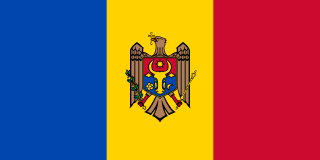
Moldova is one of the smallest countries in Europe, located between Romania and Ukraine, with no access to the sea. Its gentle hills, covered with vineyards and fertile fields, hide a history marked by successive dominations: Ottoman, Russian, Romanian and Soviet, until independence was won in 1991. Heir to the old Bessarabia (the historical name of the region, corresponding today to the country’s territory), the nation carries an identity divided between its Soviet past, its ties of language and culture with Romania, and the presence of Russian, Ukrainian and Gagauz minorities that form a unique ethnic mosaic in Eastern Europe.
Orthodox faith is intertwined with national identity: almost the entire population identifies as Orthodox Christian, and religious rites, icons and festivals shape the calendar of nearly every family. But this adherence is often more cultural than personal: centuries of Ottoman rule and decades of Soviet persecution, which closed churches and banned the teaching of the faith, left deep marks of religious nominalism. Since independence, small evangelical communities (Baptists, Pentecostals, Adventists) have grown slowly, but still represent a small fraction of the population, and face distrust in villages where the Orthodox Church holds strong social influence.
Moldova is a country of deep contrasts. It is one of the poorest in Europe, yet also one of the continent’s largest wine producers, with vineyards dating back thousands of years. It is small in territory, but home to the autonomous region of Gagauzia, of Turkic origin and Orthodox Christian majority, and to the separatist region of Transnistria, on the eastern bank of the Dniester River, which has kept its own government since the 1992 war and still follows a political path distinct from the rest of the country. Poverty and lack of opportunity have pushed millions of Moldovans abroad, making emigration perhaps the most striking feature of contemporary Moldovan life: entire villages today have more grandparents and children than working-age adults.
From a missionary standpoint, Moldova is a peculiar field: almost the entire population identifies as Christian, but most of the country’s people groups are classified as superficially reached, with little discipleship and low personal engagement with the gospel. Two small groups, the Deaf community and the Crimean Tatars, are still considered unreached. The greatest challenge is not the absence of the name of Christ, but the deepening of faith: helping a majority church, often nominal, rediscover the gospel in a personal and transforming way, and supporting the small evangelical communities already taking root in the country.
Hope for Moldova rests with its own families: with the generation that leaves in search of work and can carry the faith wherever they go, with the grandparents who sustain prayer in the villages, and with the young people who choose to stay and rebuild the country. Between its deep Orthodox heritage and the openness brought by contact with Europe, the nation carries the potential for a revival that unites tradition with a personal experience of faith, and for becoming, itself, a bridge of blessing between the East and West of the continent.
- Before the founding of the Principality, the region was inhabited by Dacian tribes and crossed by invasion routes of peoples coming from the east.
- 14th century Founding of the Principality of Moldavia, which at its height extended over a territory larger than the country's current one.
- 1456 The Principality begins paying tribute to the Ottoman Empire, but keeps internal autonomy for centuries.
- 1812 The territory between the Prut and Dniester rivers, known as Bessarabia, is annexed by the Russian Empire.
- 1918 With the end of World War I, Bessarabia joins the Kingdom of Romania.
- 1940 The Soviet Union occupies the region and creates the Moldavian Soviet Socialist Republic.
- 1991 Independence from the Soviet Union is declared on August 27.
- 1992 An armed conflict on the eastern bank of the Dniester River ends in a ceasefire, leaving the Transnistria region under separatist control to this day.
- 1994 The Constitution enshrines the autonomy of the Gagauzia region, inhabited by the Turkic minority.
- 2022 Moldova receives EU candidate country status.
- Today The country seeks closer ties with the European Union, still facing poverty, heavy emigration, and the unresolved Transnistria standoff.
-
Romanianofficial language, spoken by the vast majority of the population
-
Russianwidely used as a second language, especially in cities and in the Transnistria region
-
Gagauza language of Turkic origin spoken by the Gagauz minority, in the autonomous region of Gagauzia in the south of the country
-
Ukrainianspoken by the Ukrainian minority, especially near the border with Ukraine
-
Bulgarianspoken by a small minority in the south of the country, descendants of 19th-century Bulgarian settlers
Moldova is a small landlocked country in Eastern Europe, wedged between Romania and Ukraine. Its terrain consists of gentle hills and fertile plains, crossed from north to south by the Dniester River and, further west, by the Prut River, which marks the border with Romania. The black soil (chernozem, one of the most fertile in the world) makes agriculture and wine production the heart of the country's landscape and economy.
Major cities
- ChisinauCapital and largest city, the country's political, commercial and cultural center
- BaltiSecond-largest city, an important industrial and commercial hub in the north
- TiraspolLargest city in the separatist region of Transnistria, on the eastern bank of the Dniester River
- ComratCapital of Gagauzia, the autonomous region inhabited by the Turkic minority
- OrheiHistoric town near the Orheiul Vechi archaeological complex, amid cliffs and monasteries carved into the rock
- SorocaTown on the bank of the Dniester, known for its medieval fortress and the large houses of the local Roma community
Climate and temperature
Mămăligă
Cooked corn polenta, served with cheese, sour cream or meat; the country's most traditional dish.
Plăcintă
Dough filled with cheese, potato, cabbage or fruit, baked or fried; an everyday and festive food.
Sarmale
Cabbage or grape leaf rolls stuffed with meat and rice, slow-cooked and served with sour cream.
Zeamă
Sour chicken soup with vegetables and homemade noodles, typical of family celebrations.
Moldovan wine
Produced in centuries-old vineyards, it is a national symbol and one of the pillars of the country's economy.
Mititei
Small grilled ground meat rolls, seasoned with garlic, popular at barbecues and outdoor parties.
Borș
Sour soup made from fermented bran or beets, used to season other dishes.
Understand
Culture and spirituality
2a · The culture
Hospitality at the table
Welcoming someone with bread, salt and homemade wine is a profound gesture of respect and friendship.
Wine tradition
Growing grapes and making wine at home is a heritage passed down through generations, present even in the simplest families.
Folk music and dance
Dance circles such as the hora (traditional circle dance) mark weddings and village festivals.
Orthodox faith and tradition
The rites, fasts and festivals of the Orthodox calendar shape the rhythm of the year for most families.
Strong family bonds
Grandparents, parents and children tend to keep close ties, even when the family is scattered around the world.
Rural life and the land
Much of the population keeps a connection to the countryside, the garden and raising animals, even when living in the city.
- Refusing food or drink offered It is seen as an insult; accept at least a small portion out of respect for the host.
- Discussing the Romanian or Russian language carelessly The language issue is sensitive and tied to the country's identity and history.
- Confusing Moldovan identity with Romanian or Russian identity Many Moldovans value their own identity, distinct from both neighbors.
- Treating poverty with pity or superiority Dignity and reciprocity matter more than charity.
- Ignoring Orthodox customs Fasts, icons and religious festivals are part of daily life, even for those who do not practice the faith.
- Bringing up Transnistria without sensitivity The separatist region remains a divisive topic and a source of painful memories for many families.
2b · The field
Areas of spiritual battle and cultural captivity to cover in prayer. Tap each point to understand:
Orthodox faith is followed out of tradition and national identity, but often without a personal, living relationship with God.
Millions have left the country in search of work, fragmenting families and emptying churches of young leaders.
Beliefs in superstitions, fortune-telling and amulets exist side by side with traditional religious practice.
Excessive alcohol consumption, tied to the homemade wine culture, causes suffering in many households.
Distrust in public institutions fuels disbelief and resignation among the population.
Being one of the poorest countries in Europe breeds discouragement and the sense that the future always lies elsewhere.
Tensions between Romanian and Russian speakers, combined with the standoff with the separatist region of Transnistria, keep the country divided.
Many young people see a future only outside the country, which empties local communities and churches.
The strength of old customs sometimes hinders revivals and new ways of living out the faith.
With children and grandchildren abroad, many grandparents grow old alone in the villages.
Religious freedom is guaranteed by the Constitution, and the vast majority of the population identifies with the Orthodox Church. In practice, however, Christian minorities (Baptists, Pentecostals, Adventists and other evangelical denominations) face social pressure and, in some villages, resistance from local authorities in obtaining permits to build places of worship or hold public activities, especially where the influence of the Orthodox clergy is stronger.
In the separatist region of Transnistria, the situation is more restrictive: religious groups need registration to operate fully, foreign churches cannot register, and minority communities, such as Jehovah’s Witnesses, face difficulty obtaining official recognition. In general, converting to the gospel from a traditional Orthodox family tends to create more tension at home than persecution from the State, especially in rural communities where faith and national identity are deeply intertwined.
The persecution score runs from 0 to 100: the higher it is, the greater the pressure on Christians.
Moldova is home to 12 ethnic groups, according to the Joshua Project. Most of the population is Moldovan, of Romanian origin, but the country is also home to Ukrainian, Russian, Gagauz (of Turkic origin) and Bulgarian communities. Two small groups are considered unreached by the gospel: the Deaf community and the Crimean Tatars, who together number only a few thousand people. The vast majority of the population, however, is classified as superficially reached: many identify as Orthodox Christians by tradition and national identity, but have little contact with the Scriptures and a low evangelical presence, revealing a field ripe for discipleship and deep spiritual renewal.
- 10K Unreached 0,3%
- 0 Minimally reached 0%
- 2.9M Superficially reached 99,7%
- 0 Partially reached 0%
- 0 Significantly reached 0%
- 2 Unreached 16,7%
- 0 Minimally reached 0%
- 10 Superficially reached 83,3%
- 0 Partially reached 0%
- 0 Significantly reached 0%
Source of people group data: Joshua Project (joshuaproject.net). Estimates, may vary.
Tártaros da Crimeia
Deaf Frontier
Cigano balcã
Source: Joshua Project. Estimates, may vary.
Pray
Intercede for this nation
Every nation carries a redemptive purpose. Marks that seem woven into the identity God desires to restore:
Go
Practical details for those who want to go
Local time
Cost of living
one of the lowest in Europe
Cost by city
Reference values (source: Numbeo). Confirm before traveling.
Practical points for those who go
- Learn a few words in Romanian: the language opens doors and shows respect, even where Russian is also spoken.
- Bring cash: cards are not always accepted outside major centers.
- Respect Orthodox customs: fasts, icons and religious holidays are part of everyday life.
- Try the local wine: accepting a glass is an important part of Moldovan hospitality.
- Be patient with bureaucracy: administrative processes can be slow.
- Avoid political comments about Russia, Romania or Transnistria (the separatist region in the country's east) in casual conversation.
Send and sustain
Not everyone goes, everyone takes part
Not everyone goes. Everyone takes part.
Behind every worker among these peoples stands a network of people who pray without ceasing, care for the family left behind, and faithfully sustain the work. Sending is mission too.
Start with your church: introduce this nation, adopt it in ongoing prayer, and walk alongside those God is raising up to go.