Discover
The identity of the nation
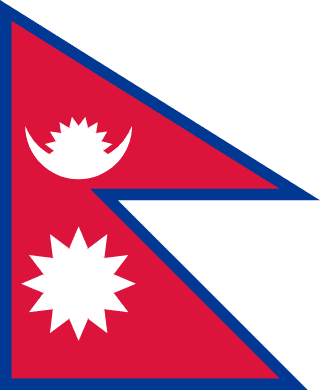
Wedged between India and China, at the heart of the Himalayan range, Nepal is the only country in the world with a flag that is not rectangular and the place where Siddhartha Gautama, the historical Buddha, was born. It is also, still today, a Hindu majority nation, something rare in the world: Nepali religiosity shapes the calendar, the temples on every corner of Kathmandu and the very way people see life and death.
Behind the beauty of the tallest mountains on the planet, including Everest, lives a hospitable and patient people, used to living alongside earthquakes, monsoon seasons and a geography that isolates entire valleys from the rest of the country. That same geography, added to more than a hundred ethnic groups and languages, makes Nepal one of the countries with the greatest diversity of peoples per square kilometer in the world, and also one of those that has least heard of Jesus.
The Nepali church is young, with less than a century of relevant history, but it has grown remarkably in recent decades, even under laws that punish those who change religion or “induce” another person to convert. That faith was forged amid social and family pressure: in many communities, becoming a Christian means being cast out of home or losing access to the village’s land and water.
Nepal has lived through, in just a few decades, the fall of an age old Hindu monarchy, a civil war and the political instability that continues to this day, with recent protests that brought down the government and left the country awaiting new elections. In this scenario of uncertainty, spiritual hunger is visible: many Nepalis migrate to the Persian Gulf and to neighboring countries in search of work, and it is often outside the country that they hear the gospel for the first time.
Even so, dozens of mountain peoples still have no Christian witness nearby, with languages that have never had even a single verse of the Bible translated. The call, for those who pray for and serve Nepal, is to walk alongside a courageous local church and help reach the most remote Himalayan valleys before another generation grows up without hearing the name of Jesus.
- 6th century BC Prince Siddhartha Gautama, who would become the Buddha, is born in Lumbini, in what is now southern Nepal.
- 1768 King Prithvi Narayan Shah unifies the small kingdoms of the region and founds the Kingdom of Nepal, with its capital in Kathmandu.
- 1846-1951 The Rana family rules as hereditary prime ministers; the king becomes a figurehead.
- 1951 End of Rana rule; the country slowly begins to open up to the outside world.
- 1996-2006 Civil war between the State and Maoist guerrillas leaves thousands dead.
- 2008 The Constituent Assembly abolishes the monarchy and proclaims the Federal Democratic Republic of Nepal.
- 2015 A magnitude 7.8 earthquake kills nearly 9,000 people and destroys entire villages; a new Constitution declares the country secular but keeps restrictions on religious conversion.
- 2025-2026 Massive popular protests bring down the prime minister; an interim government leads the country toward new elections.
-
Nepaliofficial, mother tongue of about 45% of the population, used as a second language by nearly everyone
-
Maithilisecond most spoken language, mainly in the south, in the Terai region
-
Bhojpurispoken in the Terai, close to Hindi
-
Mountain languagesmore than 120 languages recorded in the country, many of them Tibeto-Burman, spoken by small Himalayan peoples
Nepal stretches in narrow bands from south to north: it begins in the hot plains of the Terai, climbs through the green hills where most of the cities are found and ends in the icy peaks of the Himalayas, including Everest, the highest point on Earth. This sharp rise, from nearly sea level to over 8,000 meters in just a few hundred kilometers, creates completely different climates and cultures within a single country.
Major cities
- KathmanduCapital and largest city, in the sacred valley surrounded by temples
- PokharaTourist city on the shore of a lake, gateway to the Annapurna range
- Lalitpur (Patan)Ancient city of art and craftsmanship, neighboring Kathmandu
- BiratnagarMain industrial center of the Terai, in the southeast
Climate and temperature
Dal bhat
Rice with lentils and vegetables, eaten twice a day by most of the population.
Momo
Steamed dumplings filled with meat or vegetables, the country's most popular snack.
Sel roti
Sweet ring shaped rice bread, fried, traditional at festivals.
Thukpa
Noodle soup of Tibetan origin, common in the higher, colder regions.
Understand
Culture and spirituality
2a · The culture
Hospitality as a sacred value
Welcoming a visitor well is seen as an almost religious duty in any Nepali home.
Hindus and Buddhists coexist
It is common for the same person to venerate Hindu temples and Buddhist shrines, seeing no contradiction in it.
Family and caste still matter
Despite laws against discrimination, the caste system still influences marriage, work and social status.
Patience in the face of nature
Earthquakes, monsoons and mountain roads have taught a people to handle the unpredictable without despair.
Migration as survival
Millions of Nepalis work abroad and support entire families with the money they send home.
- Pointing your feet at people or temples Feet are considered the most impure part of the body in local culture.
- Touching someone's head The head is seen as sacred, even a child's; avoid this gesture of affection common in other cultures.
- Speaking ill of castes or ethnic groups The topic is sensitive and historical; better to listen than to offer an opinion on it.
- Rushing conversations and negotiations Relationships in Nepal are built slowly, over tea and with patience, not haste.
- Photographing people or ceremonies without asking Many Hindu and Buddhist rites are intimate; ask permission before taking pictures.
2b · The field
Areas of spiritual battle and cultural captivity to cover in prayer. Tap each point to understand:
Social divisions inherited from Hinduism still determine people's worth and opportunities.
Mountain animism mixes amulets, shamans and spirits that generate constant fear, not peace.
Leaving the family's religion is seen as betrayal and can cost the bond with parents and village.
The idea of karma leads many to accept suffering and poverty as an unchangeable fate.
Entire Himalayan valleys remain hard to reach, with no church or Scripture in the local language.
Parents absent for years of work abroad leave homes weakened.
Constant changes of government drain trust in institutions and fuel corruption.
Hinduism and Buddhism blend together in daily life, making a clear response to the gospel harder.
Fear of shaming the family weighs more than personal conviction in matters of faith.
Traditional fermented drinks fuel a cycle of poverty and domestic violence in several communities.
Becoming a Christian in Nepal has a real cost. The Constitution guarantees religious freedom, but that same text and the penal code prohibit any act of “converting” another person, which in practice criminalizes sharing one’s faith: whoever baptizes someone, hands out a Bible or simply invites someone to church can face prosecution and even imprisonment.
The strongest pressure, however, comes from within the home. Traditional Hindu families respond to the conversion of a son or daughter with expulsion, loss of inheritance or isolation from the village, especially outside the big cities. More radical Hindu groups publicly advocate for Nepal to become a Hindu state again, and use that cause to justify attacks on churches and assaults on Christians.
Recent political instability, with mass protests that brought down the government, has opened up even more room for this violence: reports of churches attacked and Christians arrested or beaten have increased in this period. Even so, the Nepali church keeps growing, sustained by small, discreet communities, often led by first generation converts who pay a high price for their faith.
The persecution score runs from 0 to 100: the higher it is, the greater the pressure on Christians.
Nepal is a mosaic of nearly 200 ethnic groups and peoples, shaped by the extreme geography of the Himalayas: each valley can hold a different language and identity. More than 94% of these peoples are considered unreached by Joshua Project, and the vast majority have no local church movement nor any portion of Scripture in their own language.
- 25.9M Unreached 88,5%
- Minimally reached %
- Superficially reached %
- Partially reached %
- Significantly reached %
- 183 Unreached 94,3%
- Minimally reached %
- Superficially reached %
- Partially reached %
- Significantly reached %
Source of people group data: Joshua Project (joshuaproject.net). Estimates, may vary.
Darzi Hindu Frontier
Nat Frontier
Rajput Bais Muslim Frontier
Danuwar Rai
Rajput Muslim Frontier
Tamang
Kalwar hindu Frontier
Source: Joshua Project. Estimates, may vary.
Pray
Intercede for this nation
Every nation carries a redemptive purpose. Marks that seem woven into the identity God desires to restore:
Go
Practical details for those who want to go
Local time
Cost of living
one of the cheapest in South Asia
Cost by city
Reference values (source: Numbeo). Confirm before traveling.
Practical points for those who go
- Learn basic Nepali: English is common in Kathmandu and in tourism, but nearly useless in mountain villages.
- Have patience with bureaucracy: paperwork and public services are slow and subject to strikes and religious holidays.
- Prepare your body for the altitude: even Kathmandu sits at 1,400 meters; higher valleys require acclimatization.
- Respect the festival calendar: Dashain and Tihar bring the country to a halt for entire days; plan around them.
- Bring layered clothing: the temperature swing between morning, afternoon and night is large even outside winter.
Send and sustain
Not everyone goes, everyone takes part
Not everyone goes. Everyone takes part.
Behind every worker among these peoples stands a network of people who pray without ceasing, care for the family left behind, and faithfully sustain the work. Sending is mission too.
Start with your church: introduce this nation, adopt it in ongoing prayer, and walk alongside those God is raising up to go.