Discover
The identity of the nation
Saint Pierre and Miquelon is a small French archipelago tucked away in the North Atlantic, less than 25 kilometers off the Canadian coast of Newfoundland. It is the last remnant of the old New France in North America: while Canada and the United States went their own way, these islands remained French, with France’s flag, currency (the euro), and schools, forming a small piece of Europe surrounded by Canadian waters.
For centuries, the settlement lived off cod fishing, contested between France and Great Britain in successive wars until it was established, in the 19th century, as definitively French territory. In the early 20th century it went through a curious chapter: during Prohibition in the United States, it became one of the largest storage depots for liquor smuggled into American territory, a brief period of prosperity that is still part of local memory and pride today. Today it is an overseas collectivity of France, with autonomy to manage its own affairs, but dependent on French support for much of its economy.
The Christian faith, almost entirely Catholic, is woven into the very identity of the islands: baptisms, weddings, and funerals have marked the social calendar for generations. More than 96% of the population identifies as Christian, but fewer than 1% identify as evangelical, which reveals a Christianity that is more cultural than lived out day to day. It is a reality similar to much of France: tradition remains strong, but personal practice of the faith faces the same decline seen across the rest of the country.
Geographic isolation, long winters, and the decline of fishing, which sustained entire families for generations, weigh on the spirit of an aging population that watches its young people leave to study in Canada or France, often never to return. These are challenges that touch both the life and the faith of a small community, where every family feels the changes up close.
As a link between Europe and North America, Saint Pierre and Miquelon occupies a unique place: too small to draw attention, yet significant enough to remind us that no people, however small, is beyond the reach of God’s care. Praying for these islands means interceding for a people who have already heard the name of Christ but still need to discover, personally, what that faith truly means.
- Basque, Breton, and Norman fishermen had already been frequenting the cod-rich waters around the islands since the early 16th century.
- 1536 French navigator Jacques Cartier finds French and Basque vessels already fishing near the islands.
- 1670 France formalizes possession of the archipelago, naming it Saint Pierre and Miquelon.
- 1713 The Treaty of Utrecht hands the islands to Great Britain, after years of dispute between the two crowns.
- 1763 The Treaty of Paris returns the archipelago to France, which retains fishing rights off the coast of neighboring Newfoundland.
- 1778 During the American War of Independence, British troops destroy the settlements and deport the residents back to France.
- 1816 French possession is restored, and a new population settles on the islands, rebuilding villages and churches.
- 1920 to 1933 During Prohibition in the United States, the archipelago experiences a brief period of prosperity as a storage and smuggling base for liquor.
- 1946 The islands become an overseas territory of France.
- 2003 The archipelago becomes an overseas collectivity of France, with its own administrative autonomy.
- Today A small, majority-Catholic community faces the decline of fishing, an aging population, and the search for a new economic and spiritual purpose.
-
Frenchofficial language, spoken by practically the entire population, in daily life and in schools
-
Local Frenchhas its own accent and expressions, inherited from Norman, Basque, and Breton fishermen and from contact with neighboring Newfoundland
-
Englishtaught in schools and used in contact with Canada, but rarely spoken in daily life on the islands
Saint Pierre and Miquelon is a small archipelago of volcanic origin located in the North Atlantic, a few kilometers off the southern coast of the Canadian island of Newfoundland. It is made up of three main islands, Saint Pierre, Miquelon, and Langlade, along with smaller islets, in a territory of just over 240 square kilometers. The landscape features low hills, cliffs, and few trees, shaped by strong winds and the constant presence of the sea.
Major cities
- Saint-PierreCapital and main city, home to the vast majority of the population and the archipelago's commercial and administrative center
- Miquelon-LangladeFishing village on the island of Miquelon, linked to Langlade by a long sandbar with a lagoon and a seal colony
- Île aux MarinsSmall island facing Saint-Pierre, now with no permanent residents, preserved as a landmark of the islands' fishing history
Climate and temperature
Morue (cod)
Signature dish of the islands' fishing culture, served salted, grilled, or as fried fritters
Acras de morue
Fried fritters of shredded cod and potato, a classic of the islands
Lobster and snow crab
Extremely fresh seafood, caught in the cold waters of the North Atlantic
Ragoût de mouton
Mutton stew, a heritage of French tradition blended with the customs of neighboring Newfoundland
Smoked scallops
Smoked Coquilles Saint-Jacques (scallops), a highly prized local delicacy
French pastries
Local bakeries make European-style breads and sweets, such as éclairs and strawberry tarts
Understand
Culture and spirituality
2a · The culture
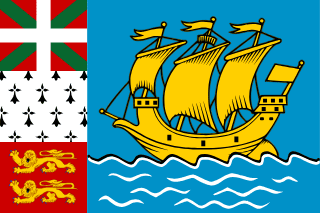
Basque, Breton, and Norman heritage
The first settlers came from these regions of France and left behind surnames, accents, and traditions that survive to this day.
French identity in North America
Even a few kilometers from Canada, the archipelago keeps its schools, currency, and culture entirely French.
Life around the sea
Fishing shaped entire generations of families, and the sea remains at the center of conversations, trades, and local memory.
Small, close-knit community
With just a few thousand inhabitants, almost everyone knows each other, and family and neighborly ties are strong.
Memory of smuggling
During American Prohibition, the archipelago experienced years of intense liquor trade, a chapter now remembered with a certain pride and good humor.
Wild nature of the Grand Barachois
A sandbar links the islands of Miquelon and Langlade, forming a lagoon where free-roaming horses and seal colonies live.
- Confusing the archipelago with Canada Despite the geographic proximity, the identity is entirely French, and residents are keen to point out this difference.
- Expecting mild weather Even in summer the weather tends to be cold, damp, and often foggy; bring appropriate clothing even outside winter.
- Treating the end of fishing abundance with indifference For many families, the decline of cod fishing is still a wound tied to the very identity of the land.
- Ignoring the size of the community Comments and attitudes spread quickly on a small island; discretion and respect are essential.
- Assuming Christian tradition is the same as a living faith The vast majority identify as Catholic, but that does not always mean a personal relationship with God.
- Counting on full medical care locally Healthcare facilities are limited, and serious cases are usually transferred to Canada or France.
2b · The field
Areas of spiritual battle and cultural captivity to cover in prayer. Tap each point to understand:
Most people identify as Christian by tradition and baptism, but few live out a personal, active faith.
Religious practice declines as in the rest of France, and faith becomes more custom than conviction.
Distance from the mainland and limited flights make access to resources and spiritual support difficult.
Young people leave to study elsewhere, and many never return, emptying the local churches.
With few young people and rare births, faith communities age along with the island.
The decline of cod fishing has shaken the sense of purpose of generations of fishing families.
Cold, fog, and months of isolation weigh on morale and community life.
Catholic celebrations remain strong culturally but lack a personal spiritual awakening.
Life in the archipelago depends almost entirely on decisions and resources from outside, which breeds complacency.
As part of France, Saint Pierre and Miquelon guarantees full religious freedom, and Christians, whether Catholic or evangelical, can gather, worship, and share their faith without any legal restriction. The archipelago even follows a rule different from the rest of the country: while France officially separates Church and State, here an old decree maintains public support for the Catholic Church, reflecting how deeply Christian faith is embedded in local history and identity.
The challenge, then, is not persecution but indifference. In practice, faith is treated more as cultural heritage than personal conviction: almost everyone identifies as Christian, but few actively participate in church life or live out the gospel day to day. In a small place, where winter is long and the population is aging, the greatest obstacle to a living faith is complacency, not opposition.
The persecution score runs from 0 to 100: the higher it is, the greater the pressure on Christians.
The archipelago has only two recorded people groups: the French people, the majority, with Basque, Breton, and Norman roots, and a small Anglo-Canadian minority linked to neighboring Newfoundland. No people here is considered unreached: the Christian faith, mostly Catholic, is historic and present throughout the population. Among the French, faith is mostly cultural, with a very low percentage of evangelicals; the small Anglo-Canadian community, on the other hand, has a proportionally much larger evangelical share, a faithful minority already living out a personal, active faith. The greatest challenge is not access to the gospel, but discipleship and the renewal of a faith often reduced to tradition among the French majority.
- 0 Unreached 0%
- 0 Minimally reached 0%
- 6K Superficially reached 94,9%
- 0 Partially reached 0%
- 300 Significantly reached 5,1%
- 0 Unreached 0%
- 0 Minimally reached 0%
- 1 Superficially reached 50%
- 0 Partially reached 0%
- 1 Significantly reached 50%
Source of people group data: Joshua Project (joshuaproject.net). Estimates, may vary.
Pray
Intercede for this nation
Every nation carries a redemptive purpose. Marks that seem woven into the identity God desires to restore:
Go
Practical details for those who want to go
Local time
Cost of living
almost 35% more expensive than mainland France since 2012, due to isolation and dependence on imports
Cost by city
Reference values (source: Numbeo). Confirm before traveling.
Practical points for those who go
- The archipelago uses the euro, not the Canadian dollar, despite its proximity to Canada.
- Bring clothes for cold and fog even in summer; the weather changes quickly.
- Flights are limited and usually depend on a connection through Canada.
- French is the everyday language; few people speak English outside tourist businesses.
- It is a small community: discretion and respect matter more here than anywhere else.
- There is no bridge between the islands: getting to Miquelon and Langlade is done by boat or plane.
- Serious medical cases usually require air evacuation to hospitals in Canada or France.
Send and sustain
Not everyone goes, everyone takes part
Not everyone goes. Everyone takes part.
Behind every worker among these peoples stands a network of people who pray without ceasing, care for the family left behind, and faithfully sustain the work. Sending is mission too.
Start with your church: introduce this nation, adopt it in ongoing prayer, and walk alongside those God is raising up to go.