Discover
The identity of the nation
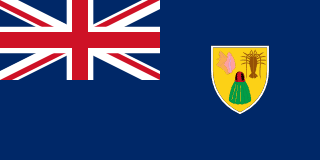
Turks and Caicos is a small archipelago of about 40 coral islands and cays in the Caribbean, southeast of the Bahamas, with a little over 47 thousand inhabitants. The name comes from two island groups: the Turks Islands, named after a local cactus that resembles the Turkish fez, and the Caicos Islands, from an indigenous word meaning “string of islands”. It is a British Overseas Territory, without political independence, but with its own government and parliament to handle internal affairs.
The Christian faith is deeply woven into island life. More than 90% of the population identifies as Christian, a direct legacy of the evangelization carried out by Methodist and Baptist churches as early as the beginning of the 19th century, when the first preachers arrived proclaiming the gospel to the enslaved people working in the plantations and salt ponds. Today the church remains at the center of community life: on Sundays, whole streets empty out as entire families head to worship services, often gathering several generations in the same congregation.
At the same time, Turks and Caicos lives with sharp contrasts. Luxury resorts and international banks exist just a few kilometers from simple neighborhoods of foreign workers, many of them Haitians and Dominicans who came seeking work in construction and tourism. This mix of peoples enriches the islands’ culture, but also creates tension: immigrants face prejudice, and the wealth generated by tourism does not always reach those who need it most.
From a missionary standpoint, Turks and Caicos is already considered a territory reached by the gospel: the three people groups registered there have a significant Christian presence, and there is no people group classified as unreached. The challenge is not access to the gospel, but depth: many people have grown up in church without ever having made a personal decision of faith, and old African-rooted witchcraft practices, known as obeah, still survive in secret, even among those who call themselves Christian.
Even so, there is reason for hope. The deep-rooted Christian tradition, the natural hospitality of the island people, and Turks and Caicos’ position as a crossing point between the Caribbean and the United States make this small territory a place with the potential to influence the whole region, should the local church be discipled more deeply and walk in greater unity among its many denominations.
- Before the arrival of Europeans, the Lucayan people (Caribbean indigenous people related to the Taino) lived on the islands, fishing and navigating among the coral banks.
- 1512 Spanish navigators sight the islands; in the following decades the Lucayans are forcibly taken to work on other Caribbean islands, and the native population disappears.
- 17th century Settlers from Bermuda begin coming seasonally to the Turks Islands to extract salt from the sea in shallow salt ponds, giving rise to the salt economy that would sustain the islands for about three centuries.
- 1783 Settlers loyal to the British crown, fleeing the American War of Independence, arrive in the Caicos Islands with enslaved people and attempt cotton plantations.
- 1799 The Turks and Caicos Islands are annexed by Great Britain as part of the Bahamas.
- 1848 The islands become a separate colony, with Cockburn Town, on Grand Turk, as the seat of government.
- 1873 The territory comes to be administered jointly with Jamaica.
- 1962 With Jamaica's independence, the islands become a British colony in their own right.
- 1976 The first own constitution is enacted; August 30 becomes Constitution Day, a national holiday.
- 2009 The United Kingdom suspends part of local self-government following reports of corruption in the islands' administration.
- 2012 Self-government is restored after new elections and a revised constitution.
- Today Turks and Caicos lives off tourism and financial services, with a predominantly Christian society that also welcomes many Haitian and Dominican immigrants seeking work.
-
Englishofficial language, used in government, schools, and commerce
-
Turks and Caicos Creolespoken day to day by many native residents, blending English with African and Caribbean influences
-
Haitian Creolespoken by the large community of Haitian immigrants who live and work on the islands
-
Spanishspoken by Dominican immigrants and other Latin Americans living in the territory
Turks and Caicos is an archipelago made up of about 40 coral islands and cays, of which only eight are inhabited. It lies in the Atlantic Ocean, southeast of the Bahamas, and is divided into two groups separated by a deep channel: the Turks Islands, where the capital is located, and the Caicos Islands, larger and now more populous. The territory is low and flat, with limestone soil, extensive mangroves, and one of the largest coral reef barriers in the world, which surrounds the islands with shallow, turquoise waters.
Major cities
- Cockburn TownCapital, on the island of Grand Turk, the historic seat of government since the 18th century
- ProvidencialesMost populous island in the territory and the main tourism hub, known for Grace Bay beach
- Grand TurkIsland where the capital is located, with the historic center and the main cruise ship port
- South CaicosTraditional fishing village, known for lobster and conch fishing
Climate and temperature
Conch fritters
Fried patties made with local conch seasoned with herbs; one of the islands' most traditional dishes.
Grits with conch
Breakfast dish made with cooked cornmeal, served with dried conch or fish.
Grilled lobster
Fresh lobster caught in local waters, grilled or fried, widely served in South Caicos.
Conch salad
Raw conch cut into cubes, marinated in lime juice, onion, and pepper.
Johnny cake
Fried or baked bread made from flour, simple and served at breakfast or as a side dish.
Rum punch
Sweet drink made with local rum, served at celebrations and waterfront bars.
Boiled fish with grits
Fish boiled with vegetables and seasonings, served with traditional grits; a typical Sunday lunch dish.
Understand
Culture and spirituality
2a · The culture
Faith as part of daily life
The church is at the center of social life: besides worship services, it runs schools, celebrations, and family support.
Respect for elders
It is common to address older people as "Mr." or "Mrs." followed by the surname, a sign of consideration.
"Belonger" identity
Those born or with deep roots in the islands identify as "belongers", a pride in belonging to their native land, distinct from the many foreigners who live and work there.
Salt extraction heritage
For three centuries, island life revolved around the salt ponds; to this day, festivals and place names recall that past.
Junkanoo
A music and dance tradition with African roots, inherited from the era of slavery, with parades of colorful costumes to the sound of drums and whistles.
Hospitality and closeness
Residents greet strangers with "good morning" and are known for their friendliness and willingness to help visitors.
Mix of peoples
Native islanders, Haitian and Dominican immigrants, North Americans, and Europeans live side by side, which brings cultural richness and also social tension.
- Ignoring the role of the church For many residents, Christian faith guides day-to-day decisions; treating it as unimportant comes across as tactless.
- Being too informal too soon Calling an older person by their first name without permission can seem disrespectful.
- Reducing the islands to a "tourist paradise" Seeing the place only as a postcard scene ignores real life, hard work, and the difficulties faced by local people.
- Joking about Haitian immigrants Immigration is a sensitive topic on the islands; careless comments can come across as prejudiced.
- Swimming or diving without heeding warnings Strong currents and coral reefs require caution; accidents in the water happen to inattentive visitors.
- Wasting water Fresh water is scarce and expensive on the islands, coming largely from seawater desalination; use it mindfully.
2b · The field
Areas of spiritual battle and cultural captivity to cover in prayer. Tap each point to understand:
Many attend church out of family tradition, but without a personal, living, transforming faith.
Old Afro-Caribbean magic practices, known as obeah, are still used in secret for healing or protection, even by those who call themselves Christian.
The wealth generated by tourism and international finance fuels the desire for consumption and social comparison.
The large number of denominations sometimes breeds rivalry rather than unity among Christians.
Haitian and Dominican workers face prejudice and exclusion, sometimes even within churches.
The prosperity from tourism does not reach everyone equally; many workers live on low wages and in poor housing.
The work pace tied to tourism keeps parents and children apart, weakening family bonds.
Tourism and nightlife normalize excessive alcohol use, including among young people.
The strong sense of identity among native islanders, the so called "belongers", sometimes turns into exclusion of those from outside.
The recurring risk of hurricanes fuels an anxiety and insecurity that only faith can truly confront.
In Turks and Caicos, Christians live in full freedom to gather, evangelize, and practice their faith, with no legal restriction from the State. The Constitution guarantees religious freedom, and the Christian faith is present in nearly every aspect of public life, from schools to official ceremonies.
The greatest challenge does not come from external persecution, but from within: a Christianity that is often more a tradition inherited from parents than a personal, living decision. The pressure of tourism, consumerism, and nightlife also tests the commitment of younger people to their faith.
Haitian and Dominican immigrants, many of them also Christian, face distrust and social exclusion on the islands, which in some cases includes difficulty being fully welcomed into local churches, even while sharing the same faith.
The persecution score runs from 0 to 100: the higher it is, the greater the pressure on Christians.
Turks and Caicos has only three people groups catalogued by the Joshua Project, and all three are already considered significantly reached by the gospel, with no unreached people group in the territory. The largest group is the islanders themselves, speakers of the local Creole; the other two are the Haitian community, numerous and predominantly Christian, and the North Americans living on the islands for work. Despite the favorable numbers, the reality calls for attention: faith is often more cultural than personal, and the church's maturity and unity still need to grow.
- 0 Unreached 0%
- 0 Minimally reached 0%
- 0 Superficially reached 0%
- 0 Partially reached 0%
- 45K Significantly reached 100%
- 0 Unreached 0%
- 0 Minimally reached 0%
- 0 Superficially reached 0%
- 0 Partially reached 0%
- 3 Significantly reached 100%
Source of people group data: Joshua Project (joshuaproject.net). Estimates, may vary.
Pray
Intercede for this nation
Every nation carries a redemptive purpose. Marks that seem woven into the identity God desires to restore:
Go
Practical details for those who want to go
Local time
Cost of living
almost everything is imported, which drives prices up significantly
Cost by city
Reference values (source: Numbeo). Confirm before traveling.
Practical points for those who go
- The currency is the US dollar: visitors coming from the United States do not need to exchange money.
- Respect the sea and the reefs: use biodegradable sunscreen and pay attention to the currents.
- The time zone follows the United States: it switches between UTC-5 and UTC-4 according to US daylight saving time.
- Sunday is church day: many businesses close earlier or do not open, especially outside Providenciales.
- Water is a scarce resource: much of it comes from seawater desalination; avoid waste.
- Few roads connect the islands: to visit different islands, a ferry or small plane is often required.
Send and sustain
Not everyone goes, everyone takes part
Not everyone goes. Everyone takes part.
Behind every worker among these peoples stands a network of people who pray without ceasing, care for the family left behind, and faithfully sustain the work. Sending is mission too.
Start with your church: introduce this nation, adopt it in ongoing prayer, and walk alongside those God is raising up to go.